International Logistics Support from Thailand
THdelivery helps overseas companies organize and coordinate international product shipments from Thailand.
Logistics support involves more than selecting a carrier. Before international transportation begins, products may need to be received from suppliers, cargo units checked, separate purchases consolidated, packaging and labeling prepared, shipment data collected and the activities of all supply-chain participants coordinated.
THdelivery can act as a local operating coordinator in Thailand and connect agreed warehouse, preparation, information and transportation activities into one manageable international logistics process.
We work with importers, distributors, online retailers, marketplace sellers, wholesale companies and private label owners that require practical operational support in the country of origin.

Core areas of logistics support
- planning an international logistics model;
- receiving products from one or several suppliers;
- recording and checking cargo units;
- warehouse handling and consolidation;
- sorting by SKU, batch and shelf-life information;
- packaging and preparing products for transportation;
- applying labels supplied or approved by the customer;
- preparing product and transportation data;
- organizing air, sea or multimodal transportation;
- providing operational updates about shipment progress.
What Is Logistics Support from Thailand?
International transportation is only one stage in moving products from a supplier to an importer.
Before products are dispatched, it may be necessary to:
- coordinate receipt from one or several suppliers;
- confirm the readiness dates of individual batches;
- receive and record cargo units;
- check the external condition of packaging;
- sort the products;
- combine purchases from different suppliers;
- prepare products for labeling;
- strengthen or replace transport packaging;
- prepare packing lists;
- confirm weight and dimensions;
- prepare information for the carrier;
- provide the importer with information about the prepared commercial batch.
Comprehensive logistics support connects these activities into one consistent operational process.
Functions THdelivery May Perform
Depending on the project, THdelivery may participate in:
- planning the logistics model;
- communicating with Thai suppliers;
- coordinating product receipt;
- receiving products in Thailand;
- warehouse handling;
- cargo consolidation;
- sorting by SKU and production batch;
- preparing products for dispatch;
- applying labels supplied or approved by the customer;
- preparing product and transportation data;
- organizing international transportation;
- providing the customer with operational updates.
The service scope is agreed individually. A customer may use a complete logistics-support model or select only the operations required for a particular project.
Logistics Support Compared with Transportation Only
A transportation-only service begins with cargo that has already been prepared. The carrier receives the cargo units and moves them along the agreed route.
Logistics support begins earlier and may include product preparation, supplier communication, consolidation, packaging, labeling, data collection and coordination among supply-chain participants.
Practical operating model:
Suppliers deliver products in Thailand, a local operating team receives and handles the goods, prepares a coordinated commercial batch, structures the required data and transfers the cargo to the selected carrier for international transportation.
Planning an International Logistics Model
An effective international shipment begins before the cargo physically starts moving.
The transportation method should be selected according to the characteristics of the specific project rather than through one standard model for all products and destinations.
Logistics planning may take into account:
- the product category;
- the composition and characteristics of the goods;
- actual and volumetric weight;
- packaging dimensions;
- the number of suppliers;
- the number of cargo units;
- the commercial value of the products;
- shipment urgency;
- the destination country;
- the importer’s requirements;
- carrier restrictions;
- the need for additional packaging;
- the need for individual product labeling;
- storage requirements;
- availability of mandatory documents;
- the commercial viability of the proposed route.
A small urgent commercial batch may be transported by air. For a large recurring order, an ocean-freight or multimodal model may be more suitable.
Certain product categories may be subject to restrictions related to composition, packaging, temperature conditions, shelf life or transportation method.
What Should Be Determined Before the Shipment Begins?
- Who owns and ships the products.
- Which suppliers participate in the project.
- Where the products will be received in Thailand.
- Whether warehouse handling is required.
- Whether consolidation is required.
- Whether additional packaging is necessary.
- Whether labeling must be applied.
- Which information must be provided to the carrier.
- Which documents the importer will require.
- Which transportation method will be used.
- Who will perform import procedures in the destination country.
Advance planning helps identify restrictions before products are purchased or committed to a transportation method that may not be suitable.

Receiving Products from Suppliers in Thailand
The international logistics process begins with the organized receipt of products from suppliers.
When several Thai companies participate in a project, each supplier may have its own schedule, product-transfer procedure, document package and recipient requirements.
THdelivery may coordinate the arrival of products in Thailand and provide the customer with operational information about the readiness of individual batches.
What Product Receipt May Include
- coordinating the delivery date and method;
- receiving cargo units;
- recording the number of boxes, pallets or other cargo units received;
- checking the external condition of packaging;
- comparing received cargo with available information;
- recording the supplier and commercial batch;
- recording visible damage;
- notifying the customer about product receipt;
- preparing products for subsequent warehouse handling.
What Is Checked During Standard Receipt?
Standard operational receipt may include checking:
- the number of cargo units;
- the condition of external transport packaging;
- visible damage;
- the identity of the supplier;
- box markings;
- available commercial-batch information;
- supporting materials transferred with the goods.
This type of check is not laboratory testing, technical inspection or a manufacturing audit. Its purpose is to identify visible discrepancies before the cargo is included in an international shipment.

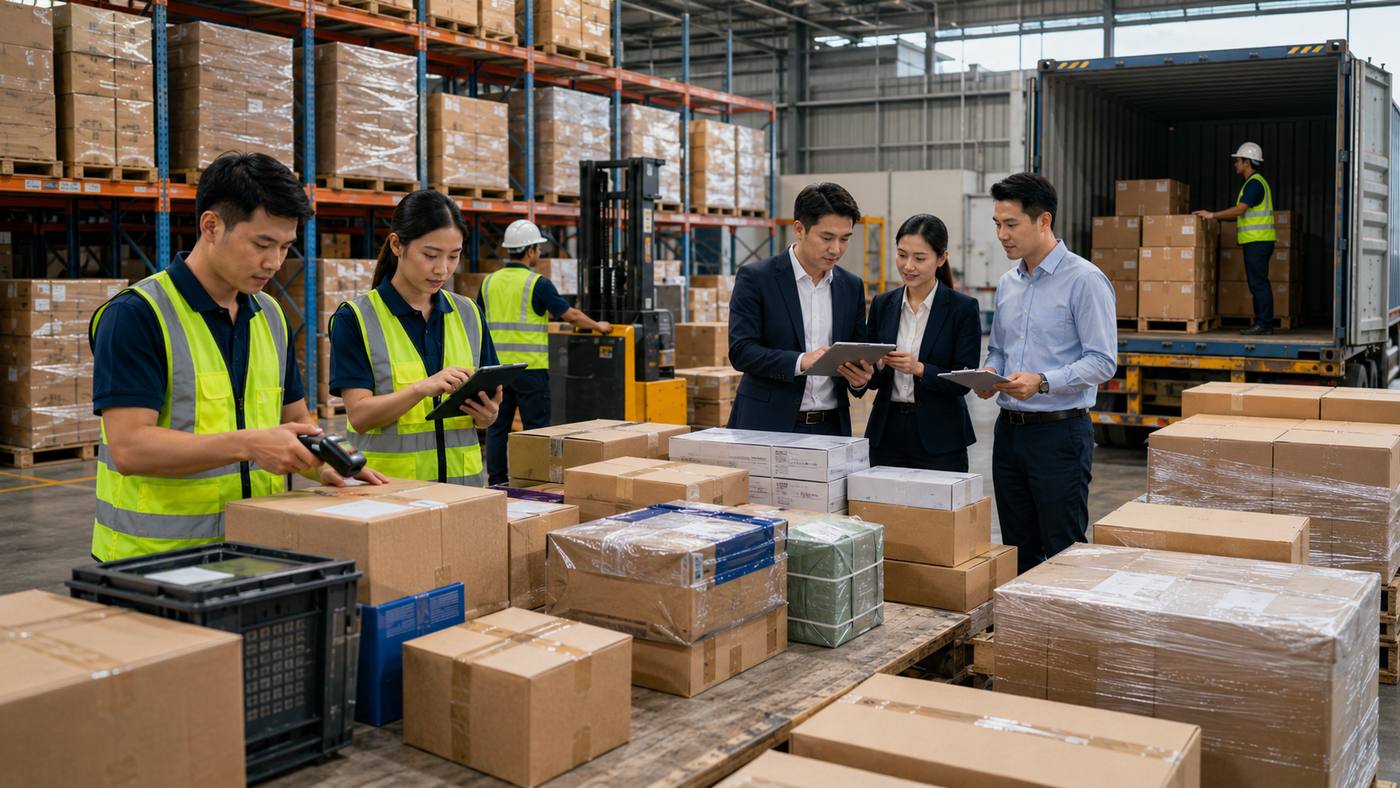
Warehouse Handling and Product Consolidation
International commercial shipments are often formed from products supplied by several manufacturers, distributors or wholesale companies.
Each supplier may deliver products on a different schedule, use its own packaging and provide a separate set of information. Without local coordination, the customer must manage each delivery independently and combine separate purchases into one international shipment.
Warehouse handling makes it possible to receive products in Thailand, record the incoming cargo units, sort the goods and prepare them for subsequent international transportation.
What Warehouse Handling May Include
- receiving cargo units from suppliers;
- recording the number of boxes, pallets and other cargo units;
- recording the receipt date;
- separating products by supplier;
- sorting products by SKU;
- sorting products by order and project;
- separating products by production batch;
- recording available shelf-life information;
- visually checking external packaging;
- preparing product inventories;
- providing additional packaging;
- forming a consolidated commercial batch.
The precise scope of warehouse handling depends on the product category, number of suppliers, customer requirements and selected logistics model.
Consolidating Products from Multiple Suppliers
Consolidation allows products from several companies to be combined into one coordinated international shipment.
Instead of managing several separate transportation operations, the customer receives one prepared commercial batch with a defined composition, number of cargo units and structured operational data.
Consolidation may include:
- receiving products from different suppliers;
- recording each incoming batch;
- separating products by SKU and order;
- combining products into one cargo batch;
- preparing a consolidated product inventory;
- optimizing the number of transport packages;
- repacking products when required;
- forming pallets or larger cargo units;
- preparing cargo for air, sea or multimodal transportation.
Benefits of Consolidation
For an overseas customer, consolidation may provide:
- one manageable shipment instead of several unrelated shipments;
- fewer separate transportation operations;
- a clearer commercial-shipment composition;
- the ability to combine a broad product range;
- one consistent product-preparation process;
- simplified subsequent warehouse records;
- more efficient use of transportation volume;
- reduced administrative workload for the importer.
When Consolidation Is Particularly Useful
Consolidation may be appropriate when:
- products are purchased from several Thai companies;
- suppliers have different order-readiness dates;
- individual batches are too small for independent shipment;
- products must be sorted by SKU or production batch;
- consistent labeling is required;
- additional packaging is necessary;
- the importer prefers to receive one coordinated commercial batch;
- shipments are organized on a recurring basis.
Important:
Consolidation is more than the physical combination of boxes. An international shipment also requires agreement on the commercial-batch composition, product quantity, labeling, documentation, weight, packaging and selected transportation method.
Packaging and Preparing Cargo for International Transportation
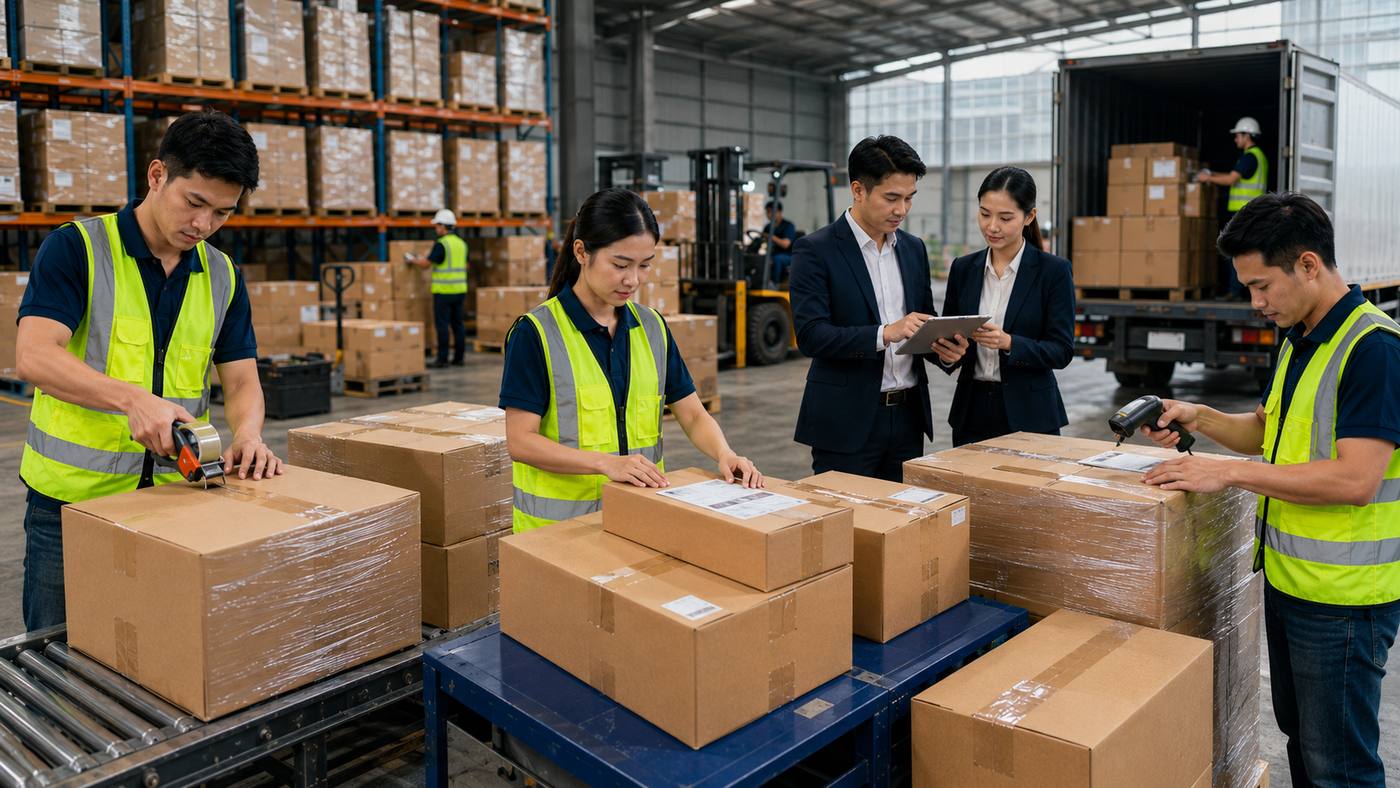
Packaging must be appropriate for the product characteristics, route duration, loading method and requirements of the selected carrier.
Factory or retail packaging is not always suitable for international transportation. In some cases, additional protection, repacking or the formation of larger cargo units may be required.
Products intended for air freight, ocean containers, international postal shipment or multimodal transportation may require different preparation methods.
Possible Transport-Packaging Operations
- checking the condition of external boxes;
- replacing damaged transport packaging;
- strengthening boxes;
- using protective packaging materials;
- securing products inside the package;
- separating fragile goods;
- sealing packages;
- protecting products from movement inside the box;
- forming pallets;
- stretch wrapping;
- labeling transport packages;
- applying cargo-unit numbers;
- preparing cargo for loading.
The scope of packaging operations is agreed individually. It depends on the product category, route, transportation duration and carrier requirements.
Preparing Individual Product Units
Online retailers, distributors and marketplace sellers may require preparation not only of transport boxes, but also of each individual product unit.
Such preparation may include:
- checking individual product packaging;
- sorting products by SKU;
- sorting products by product line;
- separating products by production batch;
- checking available shelf-life information;
- applying additional labels;
- applying barcodes;
- applying identification stickers;
- preparing protective packaging;
- forming product sets;
- separating products by intended sales channel.
Labeling Transport Packages
Each transport package should be identifiable during warehouse handling, loading and transportation.
Depending on the logistics model, a cargo-unit label may contain:
- the cargo-unit number;
- the order or project number;
- sender information;
- recipient information;
- weight;
- quantity;
- a barcode;
- handling instructions;
- fragile-goods warnings;
- information required by the carrier.
The precise labeling content is determined by the carrier, importer and other project participants.
Individual Product Labeling
For certain product categories, labeling requirements may apply not only to transport packaging, but also to every individual product unit.
Individual product packaging may receive:
- labels in the destination-market language;
- importer information;
- barcodes;
- production-batch information;
- shelf-life information;
- unique identification codes;
- other information supplied or approved by the customer.
THdelivery may perform agreed label and identification-sticker application based on layouts, codes and instructions supplied by the customer.
Legal determination of labeling obligations, mandatory label content and compliance with destination-market legislation are the responsibility of the importer and its appointed professional advisers.
Preparing Product and Transportation Data
International transportation requires consistent information about the commercial batch that has actually been prepared for shipment.
Errors in cargo-unit quantities, weight, product names, production batches or documents may lead to additional requests, delays and the need to correct information after the cargo has already been transferred to the carrier.
Operational data should therefore be prepared on the basis of the products actually received and packed.
Information That May Be Required
Depending on the project, the following information may be prepared or coordinated:
- product names;
- SKUs;
- number of product units;
- number of cargo units;
- gross weight;
- net weight;
- transport-package dimensions;
- supplier information;
- production-batch information;
- available shelf-life information;
- sender information;
- recipient information;
- information required by the carrier;
- information required by the importer and its representatives.
Documents That May Accompany the Shipment
The required document package depends on the product category, route, supply model and participant requirements.
A project may use:
- a commercial invoice;
- a packing list;
- a product inventory;
- a product specification;
- a consolidated inventory for the combined commercial batch;
- transportation documents;
- carrier instructions;
- additional documents agreed with the importer.
THdelivery’s Role in Preparing Data
THdelivery may participate in collecting, clarifying and structuring operational information directly in Thailand.
This may include:
- obtaining information from suppliers;
- checking the number of cargo units actually received;
- preparing a consolidated product inventory;
- confirming weight and dimensions after packaging;
- preparing an inventory of the consolidated commercial batch;
- providing the customer with information about the prepared cargo;
- providing agreed shipment data to the carrier;
- coordinating operational matters before dispatch.
Separation of Operational and Professional Responsibilities
THdelivery may collect and structure data connected with the commercial batch actually prepared in Thailand.
The following functions are performed by the importer and its appointed professional advisers:
- legal review of documentation;
- customs classification of products;
- determination of whether products may legally be imported;
- obtaining certificates and declarations;
- obtaining mandatory permits;
- customs declaration;
- determination of customs value;
- calculation of mandatory customs payments;
- placing products into commercial circulation.
Operating principle:
THdelivery coordinates the physical preparation of cargo and operational data in Thailand, while the importer and its professional representatives ensure compliance with destination-country requirements.
International Transportation Methods from Thailand
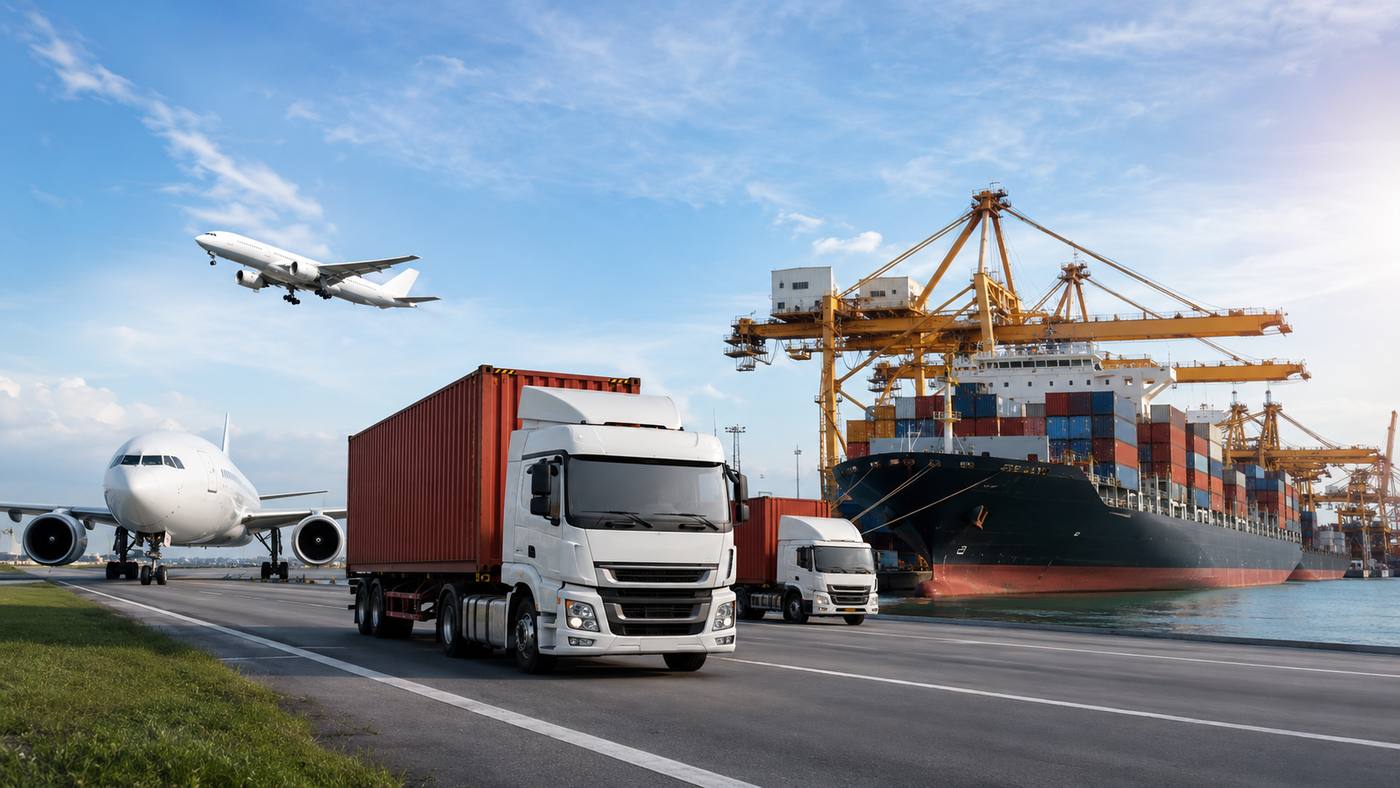
The transportation method depends on the product category, shipment volume, required delivery time, budget, destination country and restrictions imposed by the selected carrier.
There is no single delivery method that is equally suitable for every project. For one shipment, speed may be the main priority. For another, the decisive factors may be transportation cost, cargo capacity or the ability to organize recurring inventory replenishment.
Depending on the project, the following options may be considered:
- air freight;
- ocean and container transportation;
- road transportation;
- international postal shipments;
- commercial cargo transportation;
- less-than-container or consolidated cargo;
- multimodal routes using several transportation methods.
Air Freight
Air freight may be used for urgent, compact or relatively high-value commercial shipments.
This transportation method may be suitable for:
- product samples;
- test shipments;
- small and medium-sized commercial batches;
- urgent inventory replenishment;
- products with a high value relative to their weight;
- goods for which long transit times are undesirable.
Air-freight pricing may be based on actual weight or volumetric weight, depending on which figure is higher.
Shipment feasibility may also depend on:
- product composition;
- the presence of liquids or aerosols;
- the presence of batteries;
- temperature requirements;
- airline regulations;
- airport and destination-country restrictions.
Not every product can be accepted for air transportation without additional review and approval.
Ocean and Container Transportation
Ocean freight is generally used for large, heavy or planned commercial shipments.
Depending on the shipment volume, possible options may include:
- full-container-load transportation;
- less-than-container-load transportation;
- palletized cargo;
- recurring wholesale shipments;
- equipment transportation;
- large product batches for importers and distributors.
Ocean freight normally requires more advance planning, but for significant cargo volumes it may be more cost-effective than air transportation.
Before dispatch, the parties should consider:
- vessel schedules;
- the time required to form a consolidated container;
- port procedures;
- pallet and packaging requirements;
- permitted load limits;
- estimated transit time;
- storage conditions during transportation;
- delivery from the destination port;
- the requirements of the importer and customs representative.
Road Transportation
Road transportation is an important part of the international supply chain, even when the main section of the route is completed by air or sea.
Road transportation may be used:
- to collect products from suppliers;
- to deliver goods to a consolidation warehouse;
- to move cargo to an airport;
- to deliver cargo to a seaport;
- for regional transportation within Asia;
- for final-mile delivery in the destination country.
Multimodal Transportation
Multimodal logistics combines several forms of transportation within one shipment.
Possible combinations include:
- road transportation plus air freight;
- road transportation plus ocean freight;
- ocean freight plus road delivery;
- air freight plus local final-mile delivery;
- ocean, rail and road transportation within one route.
Such a model requires accurate coordination among participants, consistent transfer of documentation and schedule control at every stage.
International Postal and Small-Parcel Shipments
International postal solutions may be used for selected e-commerce models, product samples and small permitted shipments.
This model may be suitable for:
- small customer orders;
- product samples;
- test shipments;
- selected B2C and C2C shipments;
- products permitted for international postal transportation.
The suitability of a postal solution depends on the destination country, product category, declared value, weight, dimensions and postal-operator restrictions.
International postal shipment is not a universal replacement for commercial B2B logistics involving large or regulated product batches.
Cross-Border Shipment Coordination
International shipments involve companies and specialists located in different countries.
Depending on the project, the supply chain may include:
- a Thai manufacturer or supplier;
- a local operating partner;
- a consolidation warehouse;
- a road carrier;
- an airline or ocean carrier;
- an export agent;
- the importer;
- a customs representative;
- certification and regulatory bodies;
- a destination warehouse;
- a final-mile delivery operator.
For a shipment to proceed successfully, every participant must receive the necessary information on time and clearly understand its role in the process.
What Operational Coordination May Include
- obtaining product-readiness information;
- coordinating the product-receipt date;
- notifying the customer about incoming cargo units;
- coordinating warehouse handling;
- preparing weight and cargo-unit information;
- providing shipment data to the carrier;
- coordinating the loading date;
- transferring transportation documents;
- informing the customer about dispatch status;
- providing information to the importer and its representatives.
Working with the Importer
The importer is a key participant in the destination country.
The importer or its appointed specialists determine:
- whether the products may legally be imported;
- documentation requirements;
- whether certification or registration is required;
- mandatory labeling rules;
- the customs-clearance procedure;
- the conditions for placing products into commercial circulation;
- requirements for subsequent storage and sale.
THdelivery may perform agreed preparation activities in Thailand based on information and instructions provided by the importer.
Working with a Customs Representative
A customs representative or another qualified professional may determine:
- product classification;
- the required document package;
- the customs-declaration procedure;
- customs value;
- mandatory duties and payments;
- the need for additional permits;
- the procedure for completing customs formalities.
THdelivery may provide information about the commercial batch actually prepared in Thailand, but does not replace a licensed customs representative or perform its professional functions.
Shipment Information Support
Customers need clear information about the current status of their project.
Depending on the agreed operating model, updates may include:
- supplier-readiness status;
- confirmation that products have been received;
- information about missing cargo units;
- the results of visual packaging checks;
- consolidation status;
- weight and cargo-unit quantities after packaging;
- the date on which cargo was transferred to the carrier;
- the transportation-document number;
- available international transportation statuses.

Preparing Products for Destination-Country Procedures
Certain destination-country requirements must be considered before products leave Thailand.
When products must be labeled, separated by batch or prepared according to importer instructions, completing these operations after arrival may be difficult or impossible.
Depending on the product category, preparation may include:
- applying an additional label;
- preparing information in the destination-market language;
- adding importer information;
- sorting by product item;
- separating products by production batch;
- checking available shelf-life information;
- applying barcodes;
- applying unique identification codes;
- preparing data for traceability systems;
- providing special protective packaging;
- separating products by future sales channel.
Example: Labeling for the Chestny ZNAK System
Certain product categories imported into the Russian Federation may require identification labeling before customs procedures are completed.
Under this model, the importer or another authorized participant:
- determines whether labeling is mandatory;
- registers the product;
- orders identification codes;
- prepares labeling instructions;
- remains responsible for placing the product into commercial circulation.
THdelivery may perform the agreed operational part of the process in Thailand:
- receive products from the supplier;
- sort products by SKU;
- separate products by production batch;
- use shelf-life information supplied by the customer or supplier;
- apply identification stickers provided by the importer;
- check the presence and visible readability of the codes;
- form prepared commercial batches;
- transfer the products for subsequent international transportation.
As a result, the products proceed into import procedures as prepared and individually identified units.
Allocation of responsibility:
THdelivery applies labels supplied by the customer and performs the agreed operational activities. Legal assessment, product registration, code ordering and placement of products into commercial circulation are handled by the importer or other authorized participants.
Logistics Support for E-Commerce
Online retailers and marketplace sellers require recurring inventory replenishment, accurate product-range management and a repeatable logistics process.
As a business grows, the number of suppliers, SKUs, product batches and preparation activities also increases.
E-commerce logistics support may include:
- receiving products from several brands;
- combining separate purchases;
- sorting products by SKU;
- separating products by batch;
- checking available shelf-life information;
- preparing individual product units;
- applying barcodes;
- applying identification labels;
- forming commercial product batches;
- organizing recurring international shipments;
- providing the customer with shipment-status information.
Recurring Inventory Replenishment
After a test shipment, a repeatable operating process can be established:
- order preparation;
- supplier coordination;
- product receipt in Thailand;
- sorting and checking;
- consolidation;
- product preparation;
- international dispatch;
- result analysis;
- planning the next commercial batch.
This model allows the customer to avoid rebuilding the logistics process for every new order.
Marketplace Support
Product preparation for marketplace sales may include:
- identifying individual product items;
- checking SKUs;
- applying barcodes;
- applying individual labels;
- providing protective packaging;
- forming product sets;
- separating products by batch;
- preparing products for subsequent distribution.
The requirements of the relevant marketplace, import procedures and legal authorization to sell the products are determined by the product owner and its representatives in the destination country.
Support for Importers and Distributors
Importers and distributors need a predictable supply system.
Such a system may include:
- planning commercial product batches;
- working with several suppliers;
- monitoring product-readiness dates;
- receiving and consolidating products;
- preparing product labeling;
- preparing documentation;
- selecting an air- or ocean-freight model;
- recurring inventory replenishment;
- developing safety stock;
- increasing shipment volumes as sales grow.
Logistics support connects procurement, warehouse handling and international transportation into one coordinated operating system.
Outsourcing Logistics Business Processes in Thailand
It may not be economically practical for an overseas company to establish its own warehouse department, packaging team, labeling personnel and separate logistics unit in Thailand.
Selected local operations may be performed by an external operating partner under an agreed project model.
This approach allows an overseas company to use established infrastructure in the supplier country without building a separate internal team for every function.
Logistics Functions That May Be Outsourced
- coordinating product receipt from suppliers;
- receiving and recording cargo units;
- warehouse handling;
- product sorting;
- order consolidation;
- repacking and protective packaging;
- labeling transport packages;
- applying labels supplied or approved by the customer;
- preparing product inventories;
- confirming weight and dimensions;
- coordinating with carriers;
- providing the customer with operational updates.
Benefits of Outsourcing Local Operations
For an overseas customer, this model may provide:
- access to established operating infrastructure;
- fewer separate contractors;
- one communication centre in Thailand;
- reduced administrative workload;
- current information directly from the country of origin;
- earlier identification of discrepancies;
- the ability to increase volumes as the business grows;
- more time for the customer’s own team to focus on sales and market development.
The Customer Retains Commercial Control
Outsourcing selected functions does not mean transferring complete control of the international project to one party.
The customer and importer retain control over:
- product and supplier selection;
- procurement conditions;
- commercial decisions;
- destination-market requirements;
- sales-channel selection;
- the key parameters of the international shipment.
THdelivery performs agreed operational activities directly in Thailand and provides the customer with information about project progress.
Geographic Experience
THdelivery has practical experience organizing international product shipments from Thailand to Russia, Kazakhstan and Cyprus.
These projects may involve different product categories, several suppliers, specific packaging and labeling requirements, and different international transportation methods.
Shipments to other countries may also be evaluated.
The feasibility of a new project depends on:
- the product category and composition;
- the importer’s requirements;
- destination-country regulations;
- availability of the required documentation;
- carrier restrictions;
- availability of a suitable transportation route;
- the required delivery schedule;
- the commercial viability of the proposed model.
Every new logistics project is evaluated individually according to the product characteristics, expected volume and requirements of the participating companies.
Allocation of Responsibilities Among Shipment Participants
A clear allocation of responsibilities is an important part of international logistics.
Before a project begins, the parties should determine which functions are performed by THdelivery, which decisions are made by the importer, and which activities are assigned to licensed or specialist advisers.
THdelivery May Perform Agreed Operations in Thailand
- coordinating product receipt;
- receiving and recording cargo units;
- warehouse handling;
- sorting by SKU and production batch;
- consolidation;
- packaging and repacking;
- applying labels supplied or approved by the customer;
- preparing operational shipment data;
- confirming weight and cargo-unit quantities;
- communicating with the carrier;
- organizing international transportation;
- providing the customer with project-status information.
The Customer and Importer Determine
- the commercial objectives of the project;
- product and supplier selection;
- whether the products may legally be imported;
- destination-market requirements;
- whether certification or registration is required;
- mandatory labeling rules;
- the customs-clearance procedure;
- the conditions for placing products into commercial circulation;
- retail-network and marketplace requirements;
- the procedure for subsequent storage and sale.
Qualified Professional Advisers Perform
- legal assessment;
- product certification and registration;
- sanitary and technical assessment;
- customs classification;
- customs declaration;
- calculation of customs duties and mandatory payments;
- obtaining mandatory permits;
- specialist professional advice;
- placing products into commercial circulation.
This allocation connects local operational support in Thailand with the professional expertise of the importer and its representatives in the destination country.
Why Overseas Companies Choose THdelivery
THdelivery is developing a local operating model for international trade and logistics activities from Thailand.
Our approach is based on coordinating practical operations directly in the supplier country before prepared cargo is transferred to an international carrier.
Local Operating Base
An operating base in Thailand makes it possible to coordinate product receipt, handling and preparation before international dispatch.
Work with Multiple Suppliers
Products from different manufacturers and distributors may be received, recorded, sorted and combined into one coordinated shipment.
Integrated Cargo Preparation
Product receipt, consolidation, packaging, labeling and preparation of operational shipment data may be organized within one working model.
A Logistics Model for the Specific Project
The transportation method is evaluated according to the product category, shipment volume, urgency, destination country, importer requirements and carrier restrictions.
One Communication Centre
The customer can coordinate several stages through one operating point instead of managing the warehouse, packaging providers and carriers separately.
Support for Recurring Shipments
The logistics model may be used for both one-time shipments and recurring inventory replenishment or scheduled commercial supply programs.
International Business Focus
The operating model is designed for importers, distributors, online retailers, marketplace sellers, wholesale companies and private label owners.
Long-Term International Logistics Partnership
Sustainable international logistics is built not around one shipment, but around a repeatable and manageable operating process.
Long-term cooperation requires:
- stable suppliers;
- an agreed procurement schedule;
- a clear product-receipt process;
- accurate control of commercial product batches;
- reliable packaging;
- correct preparation of shipment data;
- regular communication;
- an appropriate transportation method;
- the ability to increase shipment volumes;
- the ability to adapt the model to new destination markets.
THdelivery helps connect suppliers in Thailand with overseas customers and coordinate product movement from receipt to international dispatch.

Frequently Asked Questions
What is included in logistics support from Thailand?
The service scope is agreed individually and may include route planning, product receipt, warehouse handling, consolidation, packaging, labeling, preparation of shipment data and international transportation.
Can a customer order international transportation only?
Yes, provided that the products are ready for dispatch and the required information and documentation are available for the selected transportation method.
Can a customer order consolidation only?
Yes. THdelivery may receive products from several suppliers, record and sort the goods, combine them and prepare the consolidated cargo for subsequent transportation.
Which international transportation methods are available?
Depending on the destination, product and shipment volume, possible solutions may include air, ocean, road, postal, commercial cargo and multimodal transportation.
Can small commercial shipments be handled?
Yes, provided that the products comply with carrier restrictions and destination-country requirements, and the selected logistics model is commercially reasonable.
Can recurring shipments be organized?
Yes. The logistics model may be adapted for recurring product receipt, consolidation, preparation and scheduled international shipments.
Does THdelivery provide packaging support?
Depending on the project, possible operations may include additional packaging, repacking, protective materials, pallet formation and preparation of transport packages.
Can labels be applied to individual product units?
Yes. Under an agreed project model, labels, barcodes and identification stickers supplied or approved by the customer may be applied.
Can products be prepared for the Chestny ZNAK system?
For selected projects, THdelivery may sort products and apply identification codes supplied by the importer. Product registration, code ordering and placement into commercial circulation are handled by authorized participants.
Who is responsible for customs clearance?
Customs declaration is performed by the importer, its customs representative or another authorized specialist in accordance with destination-country legislation.
Does THdelivery issue certificates and permits?
THdelivery is not a certification body or customs representative. The company may perform agreed operational activities in Thailand based on requirements supplied by the customer and qualified professional advisers.
Can cosmetics and personal care products be transported?
Feasibility depends on the product composition, product form, packaging, carrier restrictions and destination-country requirements.
Can food products be transported?
Feasibility is assessed individually according to composition, shelf life, packaging, storage conditions, permit requirements and carrier restrictions.
Does THdelivery work with online retailers and marketplace sellers?
Yes. Logistics support may include recurring inventory replenishment, receipt of products from several suppliers, sorting, labeling and preparation of commercial product batches.
Can different product categories be combined in one shipment?
This depends on product-category compatibility, carrier rules, destination-country requirements and the selected customs-clearance model.
Which countries has THdelivery worked with?
Practical experience includes organizing shipments from Thailand to Russia, Kazakhstan and Cyprus. Other destinations are evaluated individually.
How is logistics-support pricing calculated?
Pricing depends on the number of operations, cargo volume and weight, number of suppliers, packaging and labeling requirements, route and selected transportation method.
Which information is needed for a preliminary assessment?
It is helpful to provide the product category, number of suppliers, expected volume, weight, destination country, preferred timing and required operations.
How can a company begin discussing a logistics project?
The initial request should include information about the products, suppliers, expected volume, destination country, required timing and operations to be performed in Thailand.
Discuss Your Logistics Project
Tell us which products need to be shipped, where the suppliers are located, the expected shipment volume, the destination country and which operations need to be performed in Thailand.
We will review a possible operating model, including product receipt, consolidation, packaging, labeling, shipment-data preparation and international transportation.